



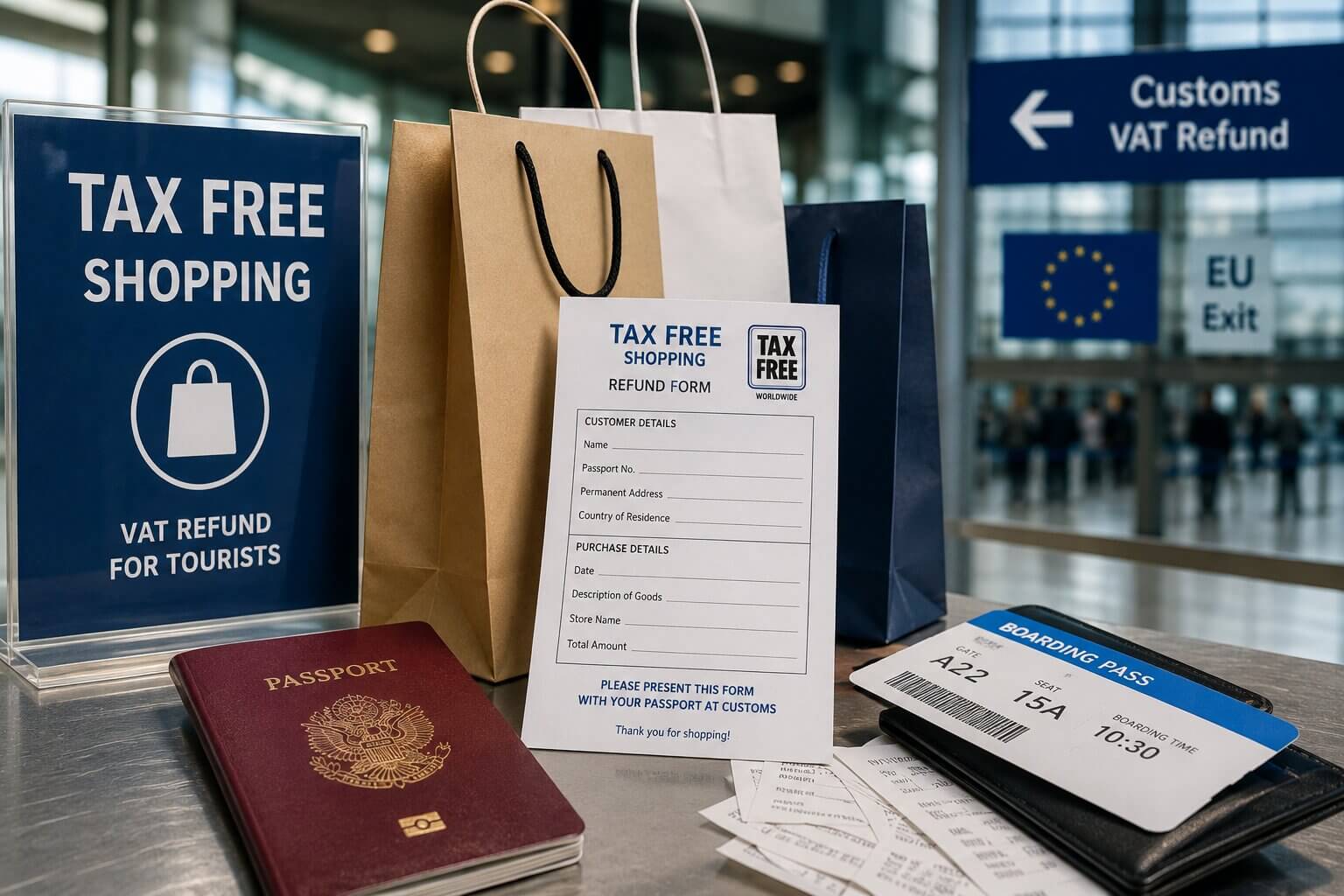
Europe Tax Free Shopping: What Travelers Should Know
Many tourists visiting Europe are surprised to discover that they may be eligible to receive part of the tax back on their purchases before leaving the country. This process, commonly known as tax free shopping or VAT refund, is especially popular among travelers who buy luxury goods, designer clothing, electronics, cosmetics, watches, or expensive souvenirs during their trip.
For many visitors, shopping in Europe is already attractive because of the variety of brands and products available. However, the possibility of receiving a VAT refund makes the experience even more appealing. In some cases, travelers can recover a noticeable amount of money from their purchases, especially when shopping in countries where VAT rates are relatively high.
Despite this, many tourists lose their refund simply because they do not fully understand how the process works. Missing one document, arriving late at the airport, or forgetting customs validation can completely cancel the refund opportunity.
Understanding how tax free shopping works before traveling can help tourists avoid common mistakes and make the refund process much smoother.
What Is VAT and Why Can Tourists Get It Back?
In most European countries, products include VAT, which stands for Value Added Tax. This tax is already included in the displayed store price, meaning travelers often pay it without realizing it.European VAT rates are usually much higher than sales taxes in many other countries and can range from around 15% to over 25%, depending on the destination.
Because tourists who permanently live outside the European Union are exporting the purchased goods out of Europe, many countries allow them to reclaim part of this tax when leaving the EU.The refunded amount is usually not the full VAT percentage because refund companies often deduct processing fees or commissions. Still, for larger purchases, the refund can be significant enough to make a noticeable difference.
Not Every Tourist Automatically Qualifies
One thing travelers should understand is that tax free shopping does not apply to everyone automatically. In most cases, the system is designed for non-European Union residents who are visiting Europe temporarily. This means that many tourists from countries such as Georgia, the United States, the United Kingdom, the Gulf countries, and other non-EU nations are often eligible.
At the same time, rules may differ slightly depending on the country, airport, or refund company involved. Some countries also require tourists to export the goods within a certain time frame after purchase.Because of this, travelers should always verify the current rules before shopping heavily in Europe.
Not Every Store Participates in Tax Free Shopping
A common misunderstanding among tourists is assuming every European store offers VAT refunds. In reality, many shops do not participate in tax free systems. Stores that do participate usually display signs such as “Tax Free Shopping,” “VAT Refund,” Global Blue, or Planet Tax Free near the cashier or entrance.
Before purchasing expensive items, travelers should always ask whether tax free service is available. This becomes especially important when buying luxury products because forgetting to ask beforehand can mean losing the opportunity for a refund later.
Minimum Purchase Amount Usually Exists
Most European countries also require a minimum spending amount before tourists can qualify for tax free shopping. This amount differs from country to country.
For example, France, Italy, Spain, Germany, and other Schengen countries each have their own thresholds. Smaller purchases often do not qualify unless the required minimum amount is reached in the same store on the same day. This is why many travelers combine purchases into one transaction instead of making several smaller payments separately.
The Tax Free Form Is Extremely Important
After purchasing eligible items, travelers must request a tax free form from the store. This document is one of the most important parts of the refund process. Without the proper form, customs officers at the airport usually cannot approve the VAT refund later.
Many travelers make the mistake of assuming the receipt alone is enough, but the refund system often requires official tax free paperwork attached to the purchase invoice. Before leaving the store, travelers should carefully verify that their passport information, purchase details, and receipts are correct and properly attached.
Keep Purchased Items Accessible
One important detail many tourists overlook is that customs officers may ask to physically inspect the purchased goods before approving the refund. Because of this, expensive items should not immediately disappear deep inside checked luggage where they cannot easily be shown. In some airports, customs officers may ask travelers to open luggage and present:
- Luxury bags
- Watches
- Electronics
- Clothing
- Jewelry
- Other expensive purchases
If the goods cannot be inspected when requested, customs officers may refuse to validate the refund documents. Keeping items unused, with original packaging and tags when possible, also helps avoid complications.
Airport Customs Validation Is the Most Critical Step
Many travelers think the process ends once they receive the form from the store, but the airport validation is actually the most important part. Before leaving the European Union, travelers must usually visit customs or tax refund counters at the airport. There, officers may request the passport, boarding pass, receipts, purchased items, and tax free forms.
If everything is approved, the documents are stamped or electronically validated. Without this customs approval, refund companies normally reject the refund request completely. This is one of the most common reasons travelers lose money they could have recovered.
Arriving Early at the Airport Is Very Important
Tax free procedures can take a surprising amount of time, especially during busy travel seasons or at major international airports. Airports such as Paris Charles de Gaulle, Milan Malpensa, Madrid Barajas, Amsterdam Schiphol, and Frankfurt often have long tax refund lines, especially during holidays and summer tourism periods.
Travelers who arrive late sometimes realize they no longer have enough time to complete customs procedures before boarding. Because of this, experienced travelers usually arrive several hours earlier when planning to process VAT refunds before departure.
Refund Methods Can Differ
After customs validation, travelers may receive the refund through several different methods. Some travelers choose immediate cash refunds at the airport, while others prefer refunds sent later to their credit card or bank account.
Cash refunds are usually faster but may involve higher service fees. Credit card refunds often take longer but can sometimes result in slightly better refund amounts. The exact process depends on the refund company, airport system, and country involved.
Many Travelers Lose Refunds Because of Simple Mistakes
Most VAT refund problems happen because travelers accidentally miss one small but important step. Some forget to request the tax free form at the store. Others pack their purchases into checked luggage too early and cannot show them to customs officers. Some travelers simply arrive late at the airport or forget to collect customs validation before departure. Even experienced travelers occasionally make mistakes with the process, which is why preparation beforehand is extremely helpful.
Final Thoughts
Tax free shopping in Europe can be a very useful benefit for international travelers, especially for those making expensive purchases during their trip. However, the process requires organization, patience, and attention to detail from the moment of purchase until departure from Europe.
Understanding how VAT refunds work, keeping documents properly organized, and preparing for airport customs procedures can help travelers avoid unnecessary stress and successfully recover part of their spending before leaving the European Union. For tourists planning shopping trips across Europe, learning the tax free process in advance can make both the travel experience and the savings much more rewarding.