

5 Common F1 Visa Application Mistakes
Our goal is to share the practical experience and observations we have gathered from working on real-life cases. This information is not based on mere theory; it reflects the specific challenges and nuances that applicants encounter daily during the visa application process. Taking these observations into account will help you better prepare for expected questions and avoid the common mistakes that often prove decisive in the final decision.
Every year, thousands of international students receive admission from American universities and prepare to begin their educational journey in the United States. However, many students underestimate how important the F1 visa process itself actually is.
Getting accepted into a university does not automatically guarantee visa approval. U.S. consular officers carefully evaluate whether the student is academically genuine, financially prepared, and likely to follow immigration rules during their stay in the United States.
In many cases, students are refused not because they are unqualified, but because they make avoidable mistakes during preparation or the visa interview itself. Here are five very common mistakes students make while applying for an F1 student visa.
1. Explain the “Why” Behind the Course
One of the biggest mistakes students make is applying to universities without properly understanding the academic program they selected.
Some applicants choose universities simply because tuition is affordable, admission was easier, or someone recommended the school. However, during the visa interview, consular officers often ask questions such as:
- Why did you choose this university?
- Why this program?
- How does this degree connect to your future career plans?
When a visa officer asks, “Why this university?” they aren’t just looking for a compliment about the school’s ranking. They are testing whether you are a genuine student or just someone looking for an entry ticket into the country. Many students struggle to answer naturally because they never fully researched the institution or curriculum beforehand.
Strong applicants are usually able to explain:
- Why they selected that specific university
- What makes the program unique
- How the curriculum supports their future career goals
- Why studying in the U.S. makes sense academically
Students who thoroughly research their program often appear much more credible and confident during the interview process.
2. Failure to Prove Strong Ties to the Home Country
Under U.S. immigration law, every F1 visa applicant is automatically presumed to have immigrant intent. This means the student must convince the officer that they plan to return home after completing their studies.
One of the most common mistakes students make is focusing too heavily on why they want to live in the United States instead of explaining why they have reasons to return home afterward. Visa officers often look for “strong ties” such as: Long-term career plans, family connections, future employment opportunities, businesses, property, and professional goals connected to the home country.
This does not mean every student must already own a business or expensive property. However, applicants should still demonstrate a realistic future plan outside the United States. Students who cannot clearly explain what they plan to do after graduation sometimes create concerns that their real intention may be permanent immigration rather than temporary education.
3. Weak or Unclear Financial Documents
Financial proof is one of the most heavily examined parts of the F1 visa process. Many students believe that simply showing a large bank balance is enough. In reality, visa officers often focus more on the source, stability, and credibility of the funds rather than only the final amount.
A major mistake applicants make is depositing a large lump sum into a bank account shortly before the interview. Consular officers frequently recognize sudden deposits and may suspect the money was borrowed temporarily only for visa purposes.
Another common issue is using sponsors who have no clear or logical relationship to the student. Strong financial documentation usually includes:
- Stable bank history
- Consistent income
- Realistic sponsor information
- Clear relationship to the sponsor
- Financial documents matching tuition and living costs
Officers generally prefer to see several months of stable financial activity rather than sudden unexplained transactions immediately before the interview.
4. Memorizing Answers Instead of Having a Natural Conversation
Many students spend weeks memorizing “perfect” interview answers from YouTube videos, online forums, or social media advice. Unfortunately, this often creates robotic and unnatural communication during the actual interview. Visa officers conduct hundreds of interviews regularly and are trained to recognize rehearsed responses very quickly.
Some students become nervous when a question is asked slightly differently than expected because they are focused on repeating memorized lines instead of understanding the conversation naturally. The interview is not designed to test whether the student memorized ideal answers. Officers mainly want to evaluate honesty, confidence, consistency, and genuine educational intentions.
Students who answer naturally and directly usually create a much stronger impression than those who sound scripted or overly rehearsed. Authenticity often matters more than perfection.
5. Underestimating the Importance of Preparation and Organization
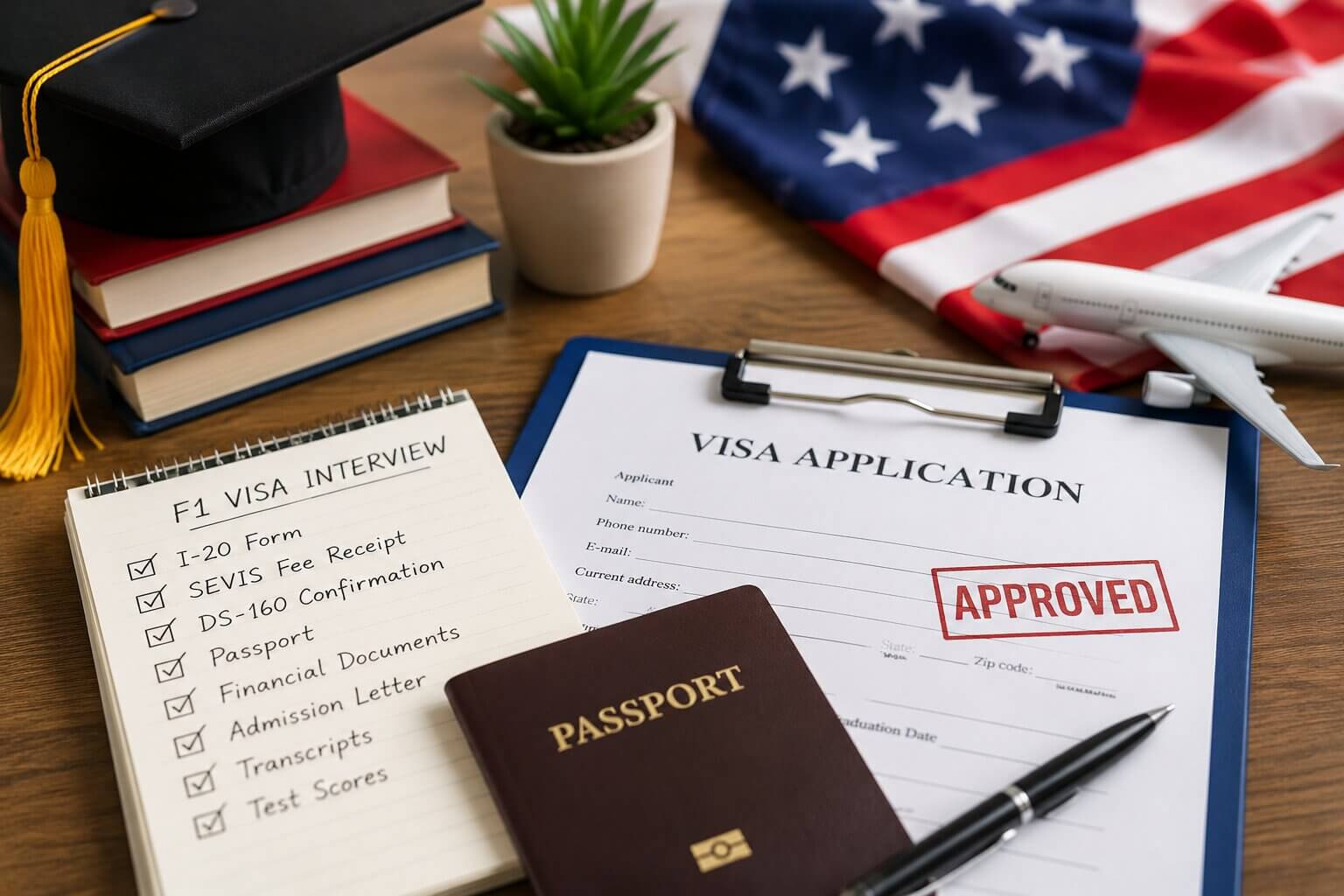
Another mistake many students make is assuming the interview itself is the only important part of the process. In reality, organization and preparation also create a strong impression. Students should always carry original documents, including:
- Academic transcripts
- Diplomas
- Financial statements
- Sponsor documents
- Test scores
- Admission letters
- SEVIS payment confirmation
- Passport and supporting paperwork
Even if officers do not ask for every document, being fully prepared demonstrates seriousness and professionalism. Some applicants arrive with incomplete files, disorganized paperwork, or uncertainty regarding their own documents. This can negatively affect the overall credibility of the application.
Confidence often comes from preparation. Students who understand their documents well usually feel calmer and perform much better during the interview itself.
Final Thoughts
The F1 visa process is not only about receiving university admission. It is about presenting a realistic, organized, and believable educational plan to the U.S. embassy. Many refusals happen because of avoidable mistakes such as weak financial evidence, poor preparation, scripted interview answers, or inability to explain future goals clearly.
Students who prepare carefully, understand their academic path, organize strong documentation, and communicate naturally during the interview usually place themselves in a much stronger position for visa approval. Good preparation does not guarantee approval, but it significantly increases the chances of a successful and confident F1 visa interview experience.